Wednesday, September 14, 2016

The Glaring Truth about UV Exposure Risk for Eyes

  While we know how important it is to protect our skin from damaging UV rays, we often forget about the effect the sun can have on our eyes.
  It is a known fact that excess UV exposure to our eyes can lead to many issues including cataracts, melanoma cancer, and even bothersome growths. Some of these problems can show up early in life for those who spend long periods outdoors in intense UV conditions. Other diseases like cataract and most eye cancers develop over many years of repeated UV exposure.
  The UV exposure leading to damage of the eye can occur not only in direct sunlight, but can also occur from reflection from water, sand, and snow. Prevention is the same in any climate, and should include both eye protection and hat.
  The recommendation from the American Academy of Ophthalmology is to “Wear sunglasses labeled “100% UV protection": Use only glasses that block both UV-A and UV-B rays and that are labeled either UV400 or 100% UV protection. Choose wraparound styles so that the sun's rays can't enter from the side.”

Thursday, September 8, 2016

The Dirty Truth on Why a Good Facial Cleaner is So Important for Skin Care

Our parents have always told us to wash our face, but what is the purpose? Besides cleansing the dirt and makeup off from throughout the day, it also helps to get rid of oil, pollutants, dead skin cell buildup, bacteria and viruses. When our pores our blocked with the debris accumulated from throughout the day, inflammation, acne, and increased pore size can follow.

There is evidence that night while sleeping, cell rejuvenation and DNA repair take place. Sleeping with your makeup on or without washing debris off deprives it of this oxygen which the skin needs to repair itself.  Also when makeup and daily debris is not cleansed from the skin, it blocks the natural exfoliating process. This will lead to dull and dry appearing skin.

Also at night, the blood flow in the skin is higher. With increased blood flow is increased absorption and penetration of products. Without cleansing the buildup doesn’t let products penetrate appropriately and are less effective.

Evaporation of water from the skin increases at night due to a rise in skin temperature.
Applying moisturizer to the skin after cleansing will help to keep skin hydrated as you sleep.

After the skin has gone through its rejuvenation process and increased cell turn over at night, you wake up with more dead skin cells that needs to be exfoliated from the skin, and more oils to remove.
And if you need one more reason to wash your face with a good cleanser… Water alone removes only about 65% of oil and debris from the surface of the skin!!!

Florida Skin Center carries a variety of Facial Cleansers that are tailored to every skin type and concern. Ask one of our knowledgeable staff members what is best for you!

Wednesday, August 31, 2016

The Red Face


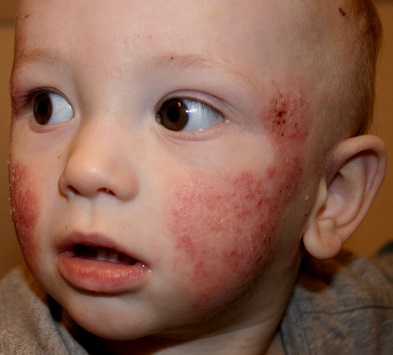
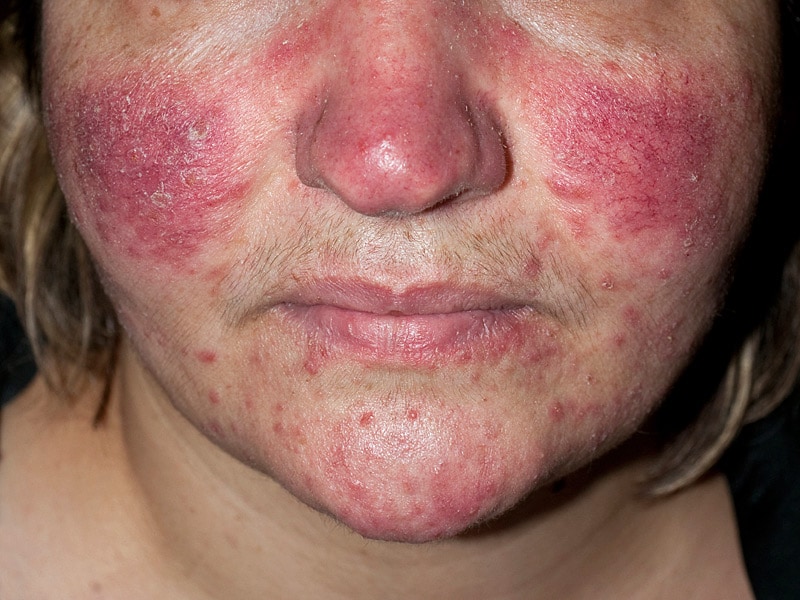
From a dermatological standpoint, redness of the face can be caused by a variety of different conditions. Common skin conditions that can cause redness of the face include acne, rosacea, seborrheic dermatitis, eczema, and allergic contact dermatitis. Less common skin conditions that can cause redness on the face include psoriasis, infections (tinea - fungal, impetigo - bacterial), lupus, and keratosis pilaris. Some of these conditions are treated with topical and/or oral anti-inflammatory medications, while others are treated with topical and/or oral antibiotics/antifungals. In this day and age, most people like to do online research and try to self-medicate before seeing a health care professional. This is not advised, as many of these skin conditions can be worsened by using the wrong treatments.

Some forms of skin cancer (basal cell carcinoma & squamous cell carcinoma) and pre-cancers (actinic keratoses) can also cause red spots on the face.

A simple skin biopsy can confirm the diagnosis that is causing redness of the face.


Wednesday, August 24, 2016

Seborrheic Keratoses


What are seborrheic keratoses?

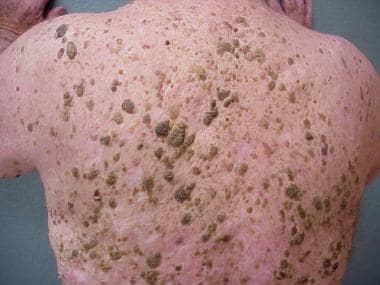
Seborrheic keratoses are benign skin growths that can be brown, tan, or skin-toned in color. They often have a warty rough appearance to them. They are also described as being "stuck-on". Many people come in to be evaluated for these lesions because they can be dark and irregular-appearing. However, seborrheic keratoses are completely benign and do not have the potential to turn into skin cancers. They are also not contagious. These lesions tend to occur as we get older. Some people have just a few, while some people have many. Seborrheic keratoses can also vary in size, from very small to very large. If one of these seborrheic keratoses becomes irritated, a simple treatment with liquid nitrogen (a cold spray) can be applied to the lesion to make it fall off.

Wednesday, August 17, 2016

Laser Hair Removal


Tired of plucking/waxing/shaving unwanted hair? There is still time to take advantage of our seasonal promotion for laser hair removal - 50% off all laser hair removal packages - going on until the end of August. Please call 239-561-3376 for more information.

At Florida Skin Center, we use the Nd:Yag laser, which is safe for treating all skin types. Laser hair removal works on dark hairs only. The laser emits highly concentrated light energy into the hair follicles. The pigment found in the root of the hair follicles absorbs the light, which then destroys the hair. It is advised to minimize plucking or waxing hair for several weeks before the laser treatment, as doing so temporarily removes the roots of the hairs. It is also important to avoid the sun and to wear sunscreen, to minimize the chance of adverse effects. Most patients will require several treatments for optimal results. Treatments are done every 4-6 weeks. There is no downtime with the procedure. There may be some redness and swelling, but patients can return to work after their treatment.

Hair will grow less frequently, and when it does grow, the hair will be finer and lighter in color.


Wednesday, August 10, 2016

Keratosis Pilaris


Keratosis pilaris, also known as "chicken skin", is a common benign skin condition that usually occurs on the outer upper arms, thighs, and cheeks. The condition presents as small bumps that usually do not itch or hurt. These bumps are plugs of dead skin cells. Often, these bumps can be mistaken for acne or eczema. There is a genetic predisposition for this condition, as it often runs in families. There is no cure or prevention for keratosis pilaris. Generally, these bumps will smooth out with time, becoming less noticeable by age 30.  Dry skin can exacerbate this condition. Treatments to help minimize the appearance of these bumps include moisturizers and exfoliants.

Tuesday, August 2, 2016

What is Psoriasis?


WHAT IS PSORIASIS?
Psoriasis is a chronic inflammatory skin condition where the skin cells shed in days instead of weeks. It is caused by combination of a genetic trait that causes a quickened autoreactive immune response and exposure to specific external factors.  External factors such as infections, physical trauma, stress, and certain drugs (lithium, antimalarials, interferon, indomethacin, beta-blockers) can trigger a psoriasis flare. Psoriasis affects people from young to old, with a peak incidence around 22.5 years. 

WHAT ARE THE SYMPTOMS OF PSORIASIS?
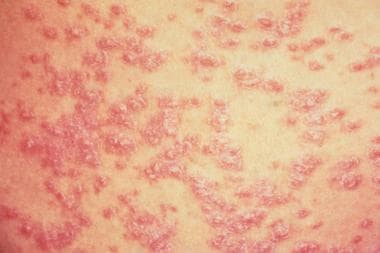
Psoriasis can present in different ways. It very often affects the scalp, knees, elbows and lower back, but can also affect the buttocks, palms, soles, armpits, ears, groin, and nails. The two most common variants are chronic stable plaque psoriasis and acute guttate psoriasis, with the former presenting as large red plaques with silvery scale that can last for months, and the latter presenting as small pink or red scaly bumps that erupt suddenly and can spontaneously resolve. 10-25% of patients with psoriasis also have joint pains (psoriatic arthritis). The diagnosis of psoriasis is often made clinically, but a skin biopsy may be done to confirm the diagnosis.

WHAT ARE THE TREATMENTS FOR PSORIASIS?
There are many treatments for psoriasis, including phototherapy, topical medications, and systemic medications. Phototherapy involves exposing affected areas to artificial UVB light. Topical medications include glucorticoids, vitamin D derivatives, immunomodulators, and retinoids. Oral systemic medications such as glucocorticoids, oral retinoids, and oral immunosuppressants are used as well, but require bloodwork and close monitoring due to more serious potential side effects. Biologic medications are injected at specific weekly or monthly intervals and also require bloodwork and close monitoring due to more serious potential side effects. Sometimes a combination of therapies may be used.


Here at Florida Skin Center, we offer all choices of treatment outlined above, but will tailor the treatment based on age of the patient, site and extent of involvement, associated medical disorders, and previous therapies. Please ask a provider about treatment options.